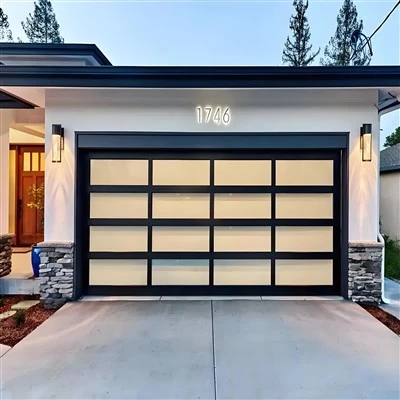
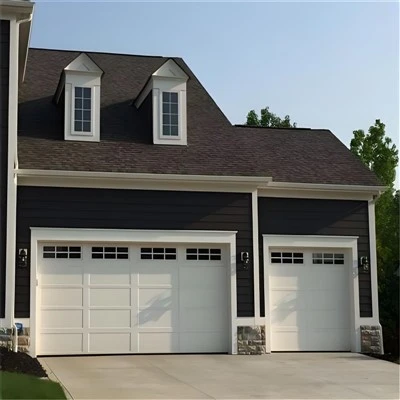
The superior performance of aluminum alloy garage doors is rooted in a scientifically rigorous structural system. Its construction is not a simple stacking of single materials, but rather a collaborative effort of multiple systems to achieve a unity of strength, durability, and functionality, providing reliable protection and aesthetic support for modern buildings.
The main frame is the core of the structure, typically made of high-strength aluminum alloy profiles through precision extrusion molding, forming regular rectangular or irregularly shaped cavities. This hollow structure reduces weight while utilizing the principle of "thin-wall reinforcement" to increase bending stiffness, distributing stress from the door's own weight and wind loads, preventing localized deformation. The frames are rigidly connected by specialized angle brackets and bolts, supplemented by reinforcing ribs at the joints to ensure overall stability, maintaining its shape even under strong wind impacts.
The panel system is the direct bearer of the structure and function. The mainstream design features a double-layer composite structure: the outer layer is a 0.8-1.2mm thick aluminum alloy sheet, surface-treated to form a dense protective layer; the inner layer is filled with polyurethane foam or rock wool insulation materials, enhancing sound and heat insulation performance while reducing panel vibration through internal support points. The connection between the panel and frame uses embedded slots or concealed riveting technology, eliminating the aesthetic impact of exposed screws and ensuring even stress distribution to prevent warping after long-term use.
The operating system determines the user experience. The track is made of aluminum alloy or stainless steel, with an aerodynamically optimized cross-section to guide the door's smooth lifting and lowering; the pulley system is equipped with self-lubricating bearings and shock-absorbing pads to reduce friction noise and extend lifespan; the balancing device (such as torsion springs or counterweights) precisely matches the torque according to the door's weight, keeping the opening and closing force within an ergonomic range, balancing safety and convenience.
From the frame to the panel and the operating components, each structural unit is designed collaboratively based on the principles of "lightweight, highly integrated, and highly adaptable". This not only meets the needs of large-size customization, but also allows for seamless integration with the intelligent drive system, demonstrating the engineering wisdom and practical value of aluminum alloy garage doors in structural design.