The design concept of electric garage doors stems from a systematic response to the functional needs of modern buildings, human living habits, and technological development trends. It's not simply about adding a drive mechanism to a traditional door; rather, it establishes a synergistic logic between structure, control, safety, and aesthetics to achieve an organic unity of automation, intelligence, and sustainability.
The primary design principle is "human-centered" convenience. Traditional garage doors rely on manual opening and closing, significantly limited by weather, physical strength, and specific scenarios. Electric garage doors, by introducing motor drive and precise control, free the passage process from these constraints, allowing users to operate them remotely or automatically from various indoor and outdoor locations. The design must fully consider the operating habits of different groups, providing diverse interaction methods such as remote control, wall switches, password input, mobile terminals, and sensor activation, making operation intuitive, responsive, and reducing learning costs and the probability of misoperation.
Safety is placed on an equal footing with design performance. The design concept emphasizes a triple defense line of "prevention, monitoring, and emergency response": Optimizing the anti-pinch and obstacle-detection rebound mechanisms in the mechanical structure ensures the door stops or reverses immediately upon contact with an obstacle; embedding current, position, and temperature monitoring in the electrical system provides early warning of abnormal conditions; and pre-setting emergency unlocking in the power supply stage ensures manual opening even in extreme situations. This multi-redundancy design not only reduces the risk of accidents but also enhances user confidence in the product.
Intelligent integration is a core trend in contemporary electric garage door design. Leveraging the Internet of Things and data interoperability, the door can be connected to smart home or community management platforms for identity recognition, time-based management, remote status queries, and fault diagnosis. The design must reserve expansion space in hardware interfaces and software protocols to ensure smooth integration with future technologies and maintain the system's vitality and adaptability.
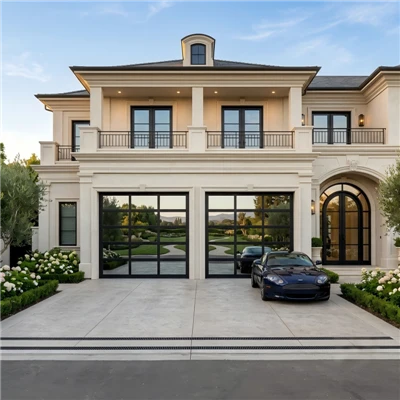
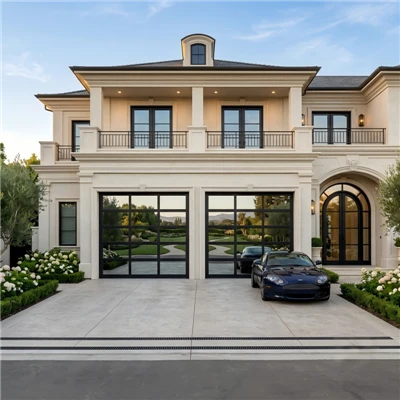
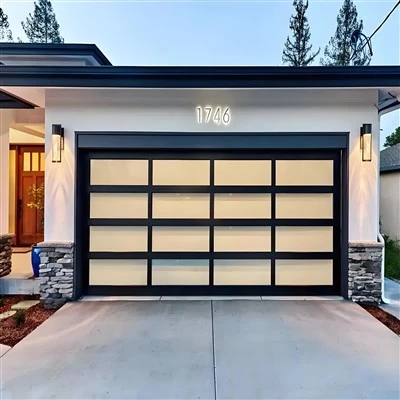
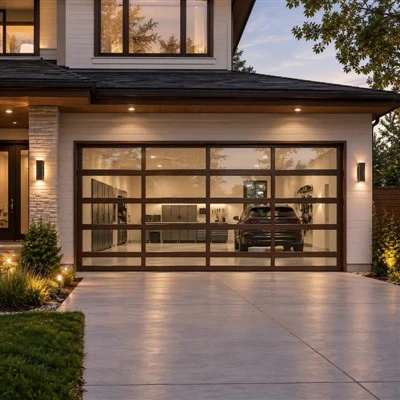
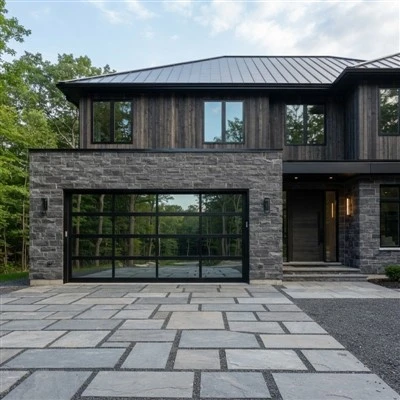
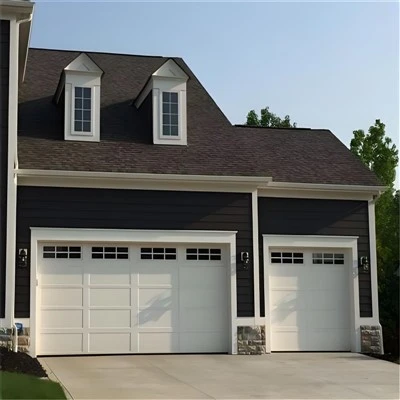
In terms of structure and aesthetics, the design concept advocates "unity of function and form." The drive unit and door structure must be compactly integrated to avoid external components disrupting the overall visual appeal; the door panel material, color, and surface treatment should be customizable to complement the architectural facade style. Meanwhile, by optimizing transmission and noise reduction measures, the system operates quietly and smoothly, improving the quality of the living and working environment.
Sustainability is also integrated throughout the entire design process. The use of recyclable materials, low-power drive systems, and long-life components reduces resource consumption and maintenance frequency throughout the entire lifecycle, embodying a green and low-carbon philosophy.
In summary, the design concept of the electric garage door prioritizes human-centered convenience, adheres to safety as a bottom line, and is driven by intelligent technology. It considers both structure and aesthetics, incorporates sustainable thinking, and constructs a future-oriented, efficient, reliable, and elegant access solution.