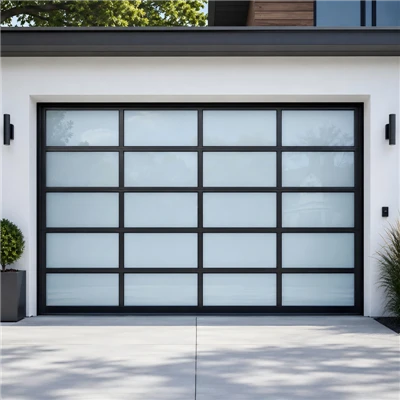
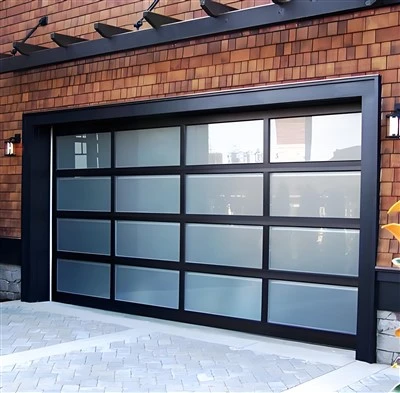
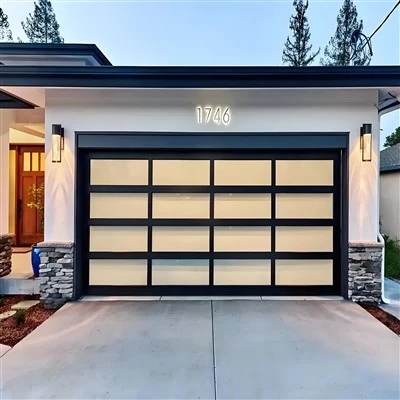
When sourcing or manufacturing garage doors for international markets, compliance is not just a preference-it is a legal mandate. Buyers frequently ask, "Do garage doors comply with international standards?" The answer depends on specific regulatory frameworks. For manufacturers looking to export to Europe, North America, or global regions, achieving CE marking, ISO certifications, and UL compliance is the definitive benchmark for safety, quality, and structural integrity.
1. The European Market: CE Marking & EN Standards
In the European Union (EU), garage doors cannot be legally sold or installed without the CE Mark. This declaration proves that the product meets stringent safety and environmental requirements.
EN 13241-1: This is the primary harmonized European standard governing industrial, commercial, and garage doors. It dictates mechanical resistance, operational safety, and wind load performance.
Mechanical Safety: Garage doors must feature anti-drop safety devices (cable break and spring break protection) to prevent sudden closure.
2. The North American Market: UL 325 and ANSI Compliance
For the United States and Canada, safety standards are governed by Underwriters Laboratories (UL) and the American National Standards Institute (ANSI).
UL 325: This is the critical safety standard for electric garage door operators. It mandates entrapment protection systems, such as photoelectric eyes (infrared sensors) and inherent reversing mechanisms, to prevent injuries to vehicles or pedestrians.
ANSI/DASMA 102: This standard specifies the structural and safety requirements for sectional garage doors, ensuring they withstand specific wind loads and repetitive cycles.
3. Global Quality Management: ISO 9001 Certification
While CE and UL focus on product-specific safety, ISO 9001 focuses on the manufacturing process.
Consistency: An ISO 9001 certified factory guarantees that every garage door panel, track, and hardware component is produced under a strict quality management system (QMS).
Traceability: It ensures raw materials (such as galvanized steel or polyurethane foam insulation) are traceable, minimizing product defects.
Conclusion
Do garage doors comply with international standards? Yes, provided you source from manufacturers who actively maintain their CE, UL, and ISO certifications. Prioritizing these verified standards protects your supply chain, eliminates customs customs clearance barriers, and ensures long-term operational safety for end-users.