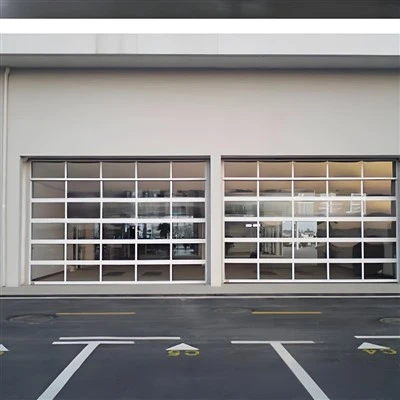
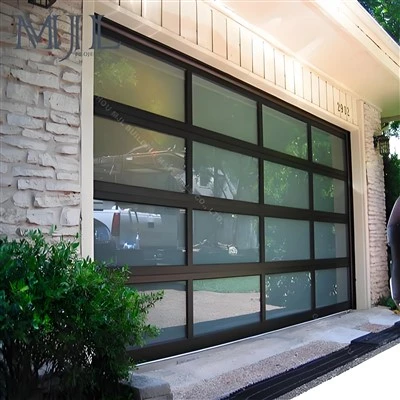
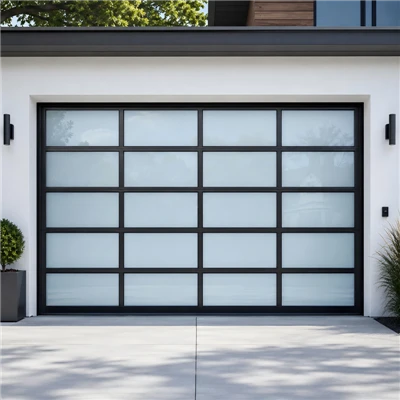
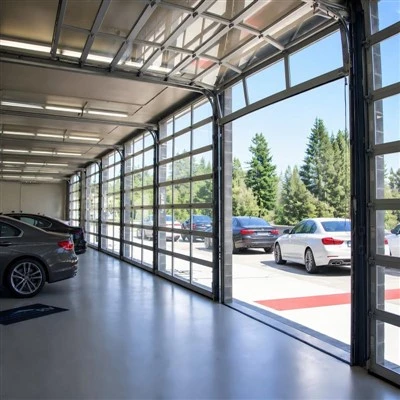
Glass garage doors combine aluminum framing with glass panels to create a modern alternative to traditional solid garage doors. They are used in contemporary homes, villas, automotive showrooms, workshops, and commercial buildings where natural light and exterior appearance matter.
For builders, architects, contractors, dealers, and project buyers, choosing a glass garage door involves more than selecting a transparent or frosted finish. Glass construction, aluminum frame design, door dimensions, operating hardware, thermal requirements, and installation conditions all affect the final specification.
MarkRod manufactures custom glass garage doors with different glass finishes, aluminum frame colors, panel layouts, and size options for residential and project applications.
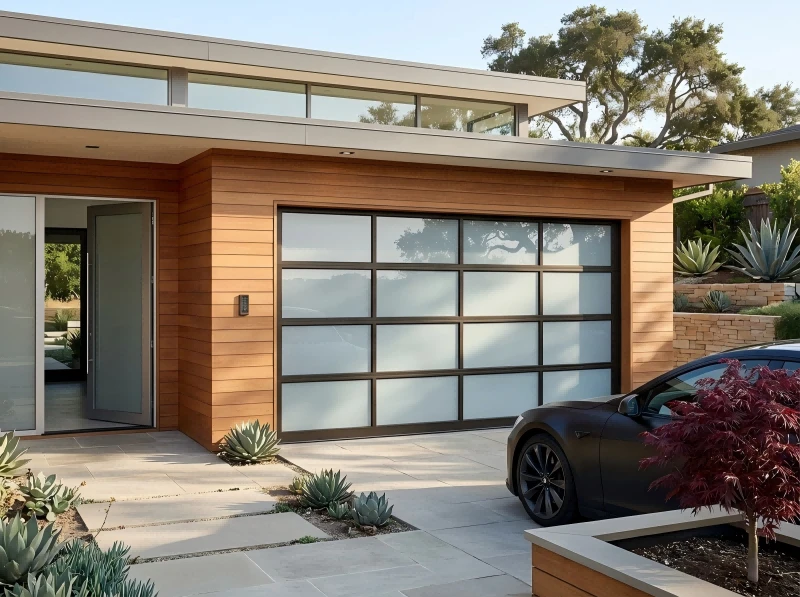
What Is a Glass Garage Door?
A glass garage door is a door system that uses glass panels supported by an aluminum frame or incorporated into an aluminum door structure. Many models use a sectional design, with connected panels moving along tracks as the door opens.
Unlike a conventional solid-panel garage door, a glass model allows the amount of visibility and daylight to be adjusted through the choice of glass and panel arrangement.
There are several configurations to consider:
✅ Full-view glass garage doors: Use large glass panels across most of the door surface.
✅ Aluminum garage doors with glass inserts: Combine aluminum panels with selected glass sections.
✅ Framed glass garage doors: Use visible aluminum profiles to define individual glass panels.
✅ Narrow-frame glass garage doors: Use slimmer visible frame profiles for a cleaner appearance, where available.
✅ Custom glass garage doors: Allow the glass, frame finish, dimensions, and panel layout to be specified for a particular project.
For projects requiring a large glazed surface, full view aluminum glass garage doors are a useful option to evaluate. Where the design requires a mixture of solid panels and glass, aluminum garage doors with glass offer a different configuration.
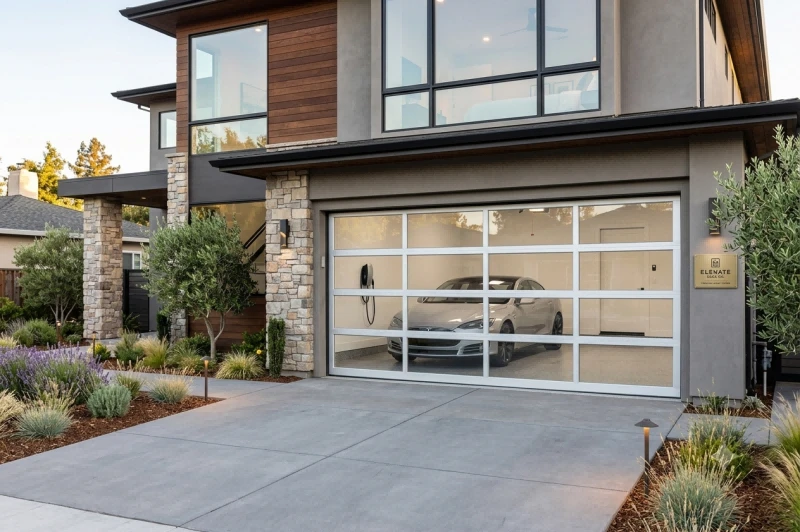
What Are the Benefits of Glass Garage Doors?
Glass garage doors offer several practical and design benefits, but the results depend on the selected glass, frame construction, and intended use.
1. A Modern Exterior Appearance
Glass panels create clean lines and a lighter visual appearance than many traditional solid doors. The aluminum frame defines the panel layout and can be coordinated with the building's window frames, cladding, and other exterior finishes.
For contemporary houses and architectural projects, modern glass garage doors provide a design option with large glazed sections and aluminum framing.
2. More Natural Light
Clear and translucent glass can allow daylight to enter the garage, reducing reliance on artificial lighting during daytime hours. This can be useful when the garage doubles as a workshop, studio, or display area.
The amount of light entering the space depends on the glass type, glazing area, orientation, and surrounding buildings. Clear glass generally provides a more direct view, while frosted and tinted options change the light transmission and visibility.
3. Flexible Design Options
Glass garage doors can be configured to suit different building styles and project requirements. Depending on the model, options may include clear, frosted, tinted, laminated, or insulated glass, along with different aluminum frame colors and panel arrangements.
For projects requiring a dark frame and a strong contrast between the glass and facade, black glass garage doors are one configuration to consider within the broader glass garage door range.
4. A Choice of Glass and Frame Materials
Aluminum is commonly used for glass garage door frames because it offers a relatively lightweight structure and good resistance to corrosion when appropriately finished. The glass provides the desired balance of transparency, privacy, and appearance.
The frame and glass should be selected together. Panel size, glass thickness, frame profile, door weight, and hardware compatibility all need to match the complete door design.
What Types of Glass Are Used in Garage Doors?
The glass type affects visibility, privacy, safety characteristics, and thermal performance. The best option depends on the building and the intended use of the garage.
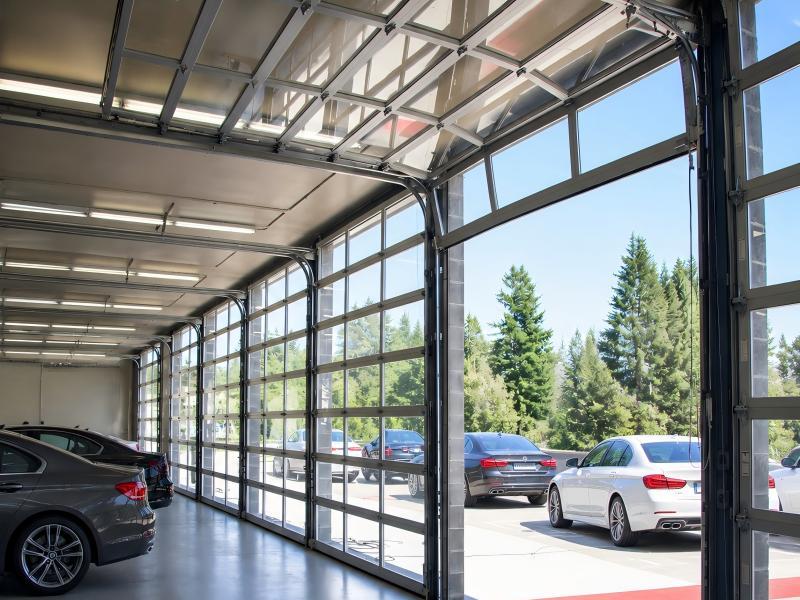
1.Clear Glass
Clear glass provides direct visibility through the door and allows daylight to enter with minimal visual obstruction. It is often considered for display areas, showrooms, and garages where an open appearance is a priority.
However, clear glass offers limited privacy. Interior lighting at night can make the garage contents more visible from outside.
2.Frosted Glass
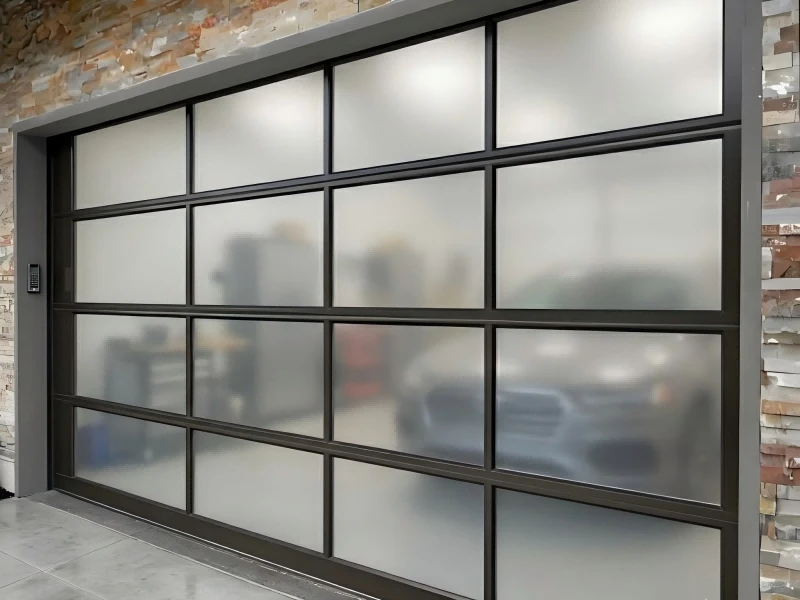
Frosted glass diffuses light and obscures direct views into the garage. It can suit street-facing residential garages, workshops, and spaces where daylight is needed but full visibility is not.
The privacy level varies by glass finish and lighting conditions, so samples should be reviewed before finalizing the specification.
3.Tinted Glass
Tinted glass changes the color and appearance of the glazed panels. Depending on the product, it may also reduce glare or visibility. Actual light transmission and solar performance should be confirmed from the selected glass specification rather than inferred from its color alone.
4.Laminated Glass
Laminated glass consists of glass layers bonded with an interlayer. It can be specified where the project requires particular safety or glass-retention characteristics. The suitable construction depends on the door design and applicable requirements.

5.Insulated Glass
Insulated glass uses multiple glass panes separated by a sealed space. It may be considered when thermal performance is important, such as in garages connected to conditioned interior spaces.
The performance of the complete door also depends on the frame, seals, panel construction, and installation. For projects with specific insulation requirements, review the available insulated garage door options and confirm the relevant specifications.
What Are the Different Glass Garage Door Designs?
Glass garage doors are available in several designs. The right choice depends on how much glass the project requires and how the door should relate to the building exterior.
1.Full-View Glass Garage Doors
Full-view designs use large glass sections across most of the door. They are commonly considered for contemporary homes, showrooms, and architectural projects where the glass surface is a major part of the facade.
Explore full-view glass garage doors when the project requires a broad glazed appearance.
2.Aluminum Doors with Glass Inserts
These designs combine aluminum panels with glass sections. They allow the project to introduce daylight and visual detail without using glass across the entire door surface.
Aluminum garage doors with glass are worth considering when the design calls for a combination of solid and glazed sections.
3.Custom Glass Garage Doors
Some projects require non-standard dimensions, specific glass finishes, a particular frame color, or a unique panel arrangement. These requirements should be confirmed before production so the door can be matched to the opening and architectural drawings.
MarkRod's glass garage door range supports different glass and frame configurations, with custom options depending on the selected model and project specification.
Where Are Glass Garage Doors Used?
Glass garage doors are used in residential and commercial environments. The appropriate configuration depends on the function of the space, privacy requirements, door size, and operating frequency.
1.Residential Homes and Villas
For contemporary houses and villas, glass garage doors can coordinate with large windows, modern cladding, and minimalist exterior designs. Clear glass may suit garages where vehicles are displayed, while frosted or tinted glass can reduce visibility from the street.
For housing developments and renovation projects, residential glass garage doors can be reviewed according to the building style, opening dimensions, and required glass finish.
2.Automotive Showrooms
Clear glass can help display vehicles and maintain a visual connection between the showroom and the exterior. Frame color, glass transparency, and panel proportions should be coordinated with the storefront and display layout.
For these applications, modern glass garage doors provide a configuration to consider where appearance and visibility are key requirements.
3.Workshops and Studios
Workshops and studios may benefit from daylight, but privacy can also matter when equipment, materials, or work areas need to be concealed. Frosted or tinted glass may be suitable depending on the required visibility.
The expected number of opening cycles should also be considered. The track, roller, spring, and opener configuration must be suitable for the door dimensions and intended operating frequency.
4.Commercial and Architectural Projects
Commercial buildings may require several doors with consistent frame colors, glass finishes, and panel layouts. Projects with multiple openings should define these details in a door schedule before production.
For a broader range of building applications, glass and aluminum garage doors can be evaluated against the project's opening sizes and design requirements.
Are Glass Garage Doors Energy Efficient?
Energy performance depends on the complete door construction rather than the presence of glass alone. A single-pane glass configuration generally provides less thermal resistance than an appropriately specified insulated glazing system, but actual performance varies by product.
Before selecting a glass garage door, consider the following:
✅ Glazing construction: Confirm whether the selected model supports insulated glass and request available performance data.
✅ Frame and panel structure: The frame and other door components affect overall thermal performance.
✅ Weather seals: Appropriate perimeter and panel seals help limit air leakage.
✅ Installation conditions: Gaps around the opening can affect the performance of the installed door.
✅ Climate and building use: A garage connected to a heated or cooled interior may require a different specification from a detached, unconditioned garage.
If insulation is a key project requirement, compare the available insulated garage door configurations and confirm the glass construction and complete door performance with the manufacturer.
Are Glass Garage Doors Safe and Durable?
Safety and durability depend on the glass specification, aluminum frame, hardware, operating system, and installation quality. Glass garage doors should be evaluated as complete door assemblies.
1.Glass Construction
The selected glass should meet the project's applicable safety requirements. Tempered or laminated glass may be specified depending on the application and required performance. Confirm the suitable glass type and thickness for the selected model rather than assuming all glass panels provide the same protection.
2.Aluminum Frame and Hardware
The aluminum frame must support the glass panels and work with the door's hinges, tracks, rollers, and other hardware. Correct component selection is especially important for wider or heavier doors.
3.Outdoor Exposure
Aluminum frames with suitable surface finishes can provide good corrosion resistance. Cleaning and inspection requirements still depend on the local environment, glass finish, and manufacturer's maintenance instructions.
4.Operation and Maintenance
Glass surfaces may show dust, fingerprints, and water marks more readily than solid panels. Regular cleaning helps maintain the appearance, while mechanical components should be inspected and maintained according to the manufacturer's guidance.
For projects with specific impact-resistance requirements, impact glass garage doors are another configuration to evaluate. Confirm the tested performance and suitability for the intended application before specifying the product.
How to Choose the Right Glass Garage Door for a Project
Selecting a suitable door starts with the opening and the building requirements. For contractors, architects, dealers, and project buyers, the following details should be reviewed before confirming the order.
1. Measure the Garage Opening
Confirm the width, height, headroom, side room, and other relevant installation dimensions. For new construction, architectural drawings can help establish the opening requirements. For replacement projects, actual site measurements should be verified.
2. Select the Glass Finish
Choose clear, frosted, tinted, or another available glass option according to visibility, privacy, and appearance. If the project requires insulated or laminated glass, confirm its compatibility with the selected door model.
3. Confirm the Aluminum Frame Finish
Frame color and profile affect the finished appearance. Coordinate the selected finish with nearby windows, doors, cladding, and other facade elements.
4. Choose the Panel Layout
The number and proportions of the panels should suit the opening dimensions and design intent. A layout for a wide double garage may differ from one for a single-car opening.
5. Check Operating Requirements
Confirm the door type, opener compatibility, expected operating frequency, and applicable safety requirements. Door weight and dimensions affect the selection of the operating hardware.
6. Confirm Customization and Production Details
For non-standard doors or multi-opening projects, provide drawings, quantities, glass preferences, frame finish, and target delivery requirements. The manufacturer can then review the proposed configuration and clarify any technical details before production.
MarkRod supports custom glass garage door manufacturing for project requirements, including glass selection, frame finishes, panel layouts, and custom dimensions, subject to the selected model and confirmed specifications.
How Much Do Glass Garage Doors Cost?
The cost of a glass garage door depends on more than its overall dimensions. Glass type, frame design, panel layout, operating hardware, customization, and order quantity can all affect the final quotation.
Common cost factors include:
✅ Door size: Larger openings require a different quantity of materials and may affect the door structure and hardware.
✅ Glass specification: Different glass constructions and finishes have different material and processing requirements.
✅ Frame design: Aluminum profile dimensions, surface finish, and panel arrangement influence the specification.
✅ Operating system: Opener and hardware requirements depend on the door configuration and intended use.
✅ Customization: Non-standard dimensions or special panel layouts may require additional design review and production work.
✅ Project quantity: Multiple doors may require coordinated specifications, production planning, and packaging arrangements.
For an accurate quotation, provide the opening dimensions, selected glass, frame finish, panel layout, quantity, and project drawings where available. You can start by reviewing MarkRod's custom glass garage doors and identifying the configuration that best matches the project.
Conclusion
Glass garage doors combine the visual benefits of glazing with the structural role of an aluminum frame. They can suit modern homes, villas, showrooms, workshops, and commercial buildings when the glass type, dimensions, operating hardware, and performance requirements are specified correctly.
Clear, frosted, tinted, laminated, and insulated glass serve different purposes. Full-view designs maximize the glazed appearance, while aluminum doors with glass inserts offer another way to balance solid panels and visibility. The right choice depends on the opening, the building, and the way the space will be used.
For builders, contractors, dealers, and project buyers, confirming the complete specification before production helps reduce avoidable changes. MarkRod supplies custom glass garage doors with options for glass, frame finish, panel layout, and dimensions, subject to the selected model and project requirements.
Frequently Asked Questions
1. What is the main advantage of a glass garage door?
A glass garage door offers a contemporary appearance and can allow natural light into the garage. The level of visibility and privacy depends on the selected glass finish and panel configuration.
2. Which glass is best for garage doors?
The best option depends on the application. Clear glass provides direct visibility, frosted glass reduces direct views, and tinted glass changes the appearance and visibility of the panels. Laminated or insulated glass may be considered when specific safety or thermal requirements apply.
3. Do glass garage doors offer privacy?
Privacy depends on the glass type, lighting, and viewing conditions. Frosted or tinted glass can reduce visibility compared with clear glass, but the actual result should be checked against the selected product and finish.
4. Can glass garage doors be customized?
Customization may include door dimensions, glass finish, aluminum frame color, and panel layout, depending on the selected model. Project drawings and opening measurements help the manufacturer review the requirements.
5. Are glass garage doors suitable for commercial buildings?
They can be suitable for showrooms, workshops, studios, and other commercial applications where glass is appropriate. The selected door should match the opening, operating frequency, safety requirements, and performance needs of the building.
6. How do you maintain a glass garage door?
Clean the glass and frame using products suitable for the specified materials. Inspect the tracks, rollers, hinges, springs, and opener according to the manufacturer's maintenance instructions. Do not adjust high-tension components unless qualified to do so.
7. What details are needed for a glass garage door quotation?
Provide the opening dimensions, required quantity, preferred glass type, frame finish, panel layout, operating requirements, and project drawings or reference images where available. These details help establish a more accurate specification and quotation.