Glass garage doors are increasingly used in modern residential buildings, automotive showrooms, workshops, and commercial spaces. Their large glass panels create a more open appearance and allow natural light into areas that would otherwise rely on artificial lighting. For architects, builders, contractors, and project buyers, they also offer flexibility in glass selection, aluminum frame finishes, and panel layouts.
However, glass garage doors are not suitable for every opening or application. Privacy, thermal performance, security requirements, operating frequency, and maintenance all affect the final specification. Understanding these factors helps project teams determine whether glass garage doors are the right choice and which configuration fits the building.
MarkRod supplies custom glass garage doors with configurable glass options, frame finishes, sizes, and panel layouts for residential and architectural projects.
One-Stop Custom Glass Garage Doors for Residential Projects
For residential construction, glass garage doors can become a major part of the building's exterior design. They work particularly well with contemporary homes, villas, and renovations where the garage door needs to coordinate with windows, exterior cladding, and other architectural elements.
1.Exterior Appearance and Natural Light
Large glass panels create a different visual effect from traditional solid garage doors. They can make a garage entrance look more open and allow daylight into the interior, which is useful when the garage also serves as a workshop, hobby area, or multipurpose space.
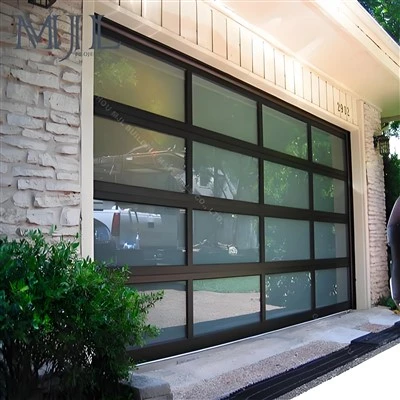
Projects that need a broad glazed surface can consider full view glass garage doors. Their large glass sections and aluminum framing create a defined panel layout that can be coordinated with the building facade.
For homes with a contemporary exterior, modern garage doors offer additional design options to consider alongside glass configurations.
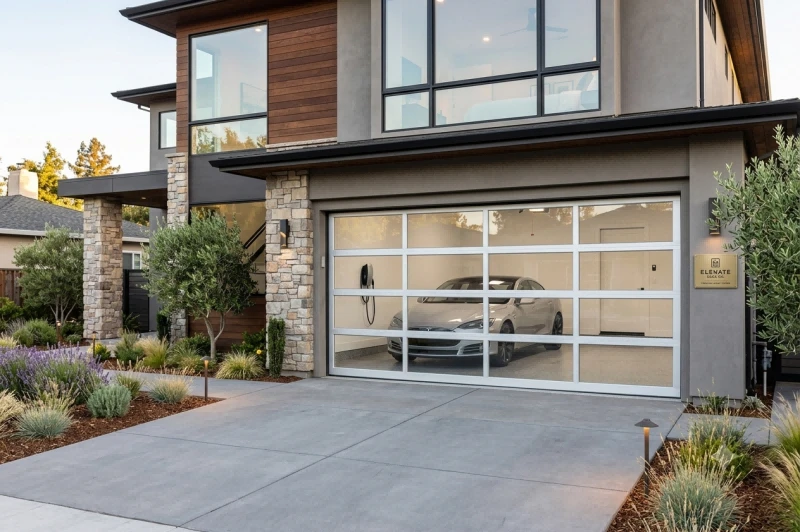
Transparency is one of the main factors to consider before choosing a glass garage door. Clear glass provides a direct view into the garage, while frosted or tinted glass can reduce visibility and change the appearance of the facade.
The choice depends on the location of the garage and how the space is used:
✅ Clear glass: Suitable when visibility and an open appearance are priorities.
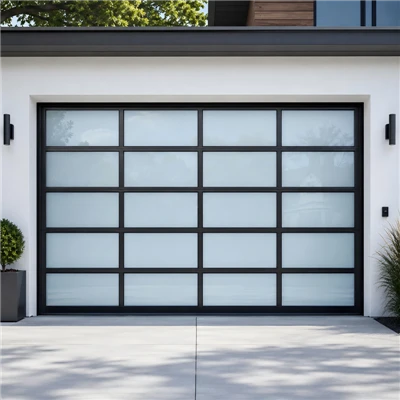
✅ Frosted glass: Reduces direct visibility while allowing diffused daylight to enter.
✅ Tinted glass: Changes the visual tone of the door and may reduce visibility, depending on the glass specification and lighting conditions.
✅ Laminated glass: Can be considered where the project specification calls for laminated glazing construction.
✅ Insulated glass: Worth reviewing when thermal performance is an important requirement.
For a darker exterior, black glass garage doors combine black aluminum framing with glass panels. The glass finish can be selected according to the required balance between visibility and privacy.
Glass options should be confirmed for the selected model before production. Privacy and thermal performance depend on the actual glazing construction, not just the appearance of the glass.
A glass garage door must be specified as a complete door system, not simply as a glass panel mounted in a frame. Glass construction, aluminum profiles, hinges, rollers, tracks, spring systems, and the opener all affect the finished door.
For residential projects, confirm the required glass type, panel dimensions, operating method, and applicable local building requirements. Where the garage is attached to a conditioned living area, thermal performance and weather sealing also deserve attention.
Projects that require more thermal control can review insulated garage door options and confirm which glazing configurations are available for the intended application.
One-Stop Custom Glass Garage Doors for Commercial Projects
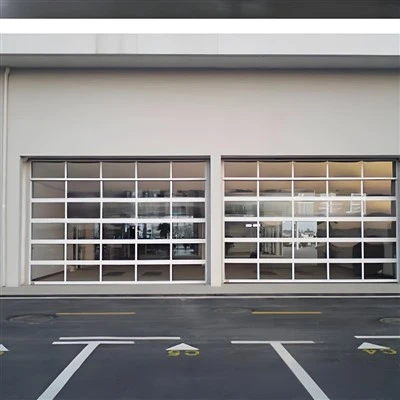
Glass garage doors are also used in commercial buildings where visibility, daylight, and exterior presentation matter. Common applications include automotive showrooms, service workshops, studios, restaurants with suitable openings, and mixed-use developments.
For commercial projects, the selection process should consider not only appearance but also how often the door operates, what lies behind it, and the performance requirements of the opening.
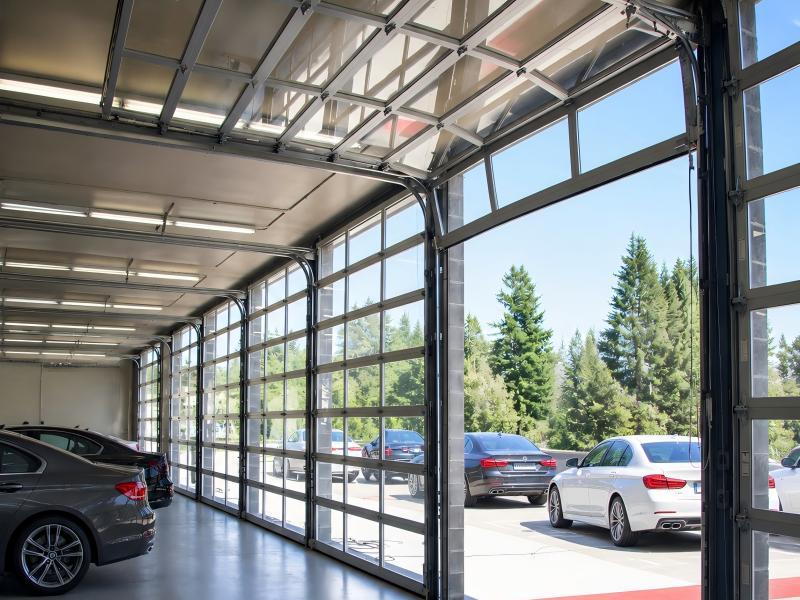
1.Showrooms and Display Areas
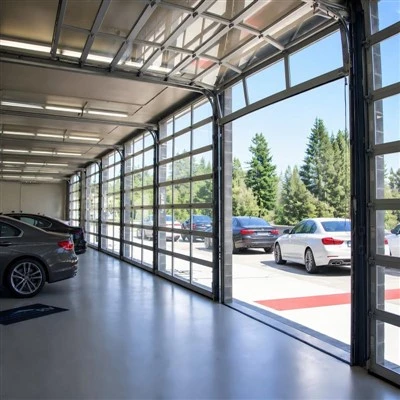
Automotive showrooms and product display spaces often benefit from transparent glass because products remain visible when the door is closed. The glass frontage can also create a visual connection between the interior and the surrounding area.
For these applications, glass full view garage doors can be considered when the design calls for large glass panels and defined aluminum frames.
The final panel layout should match the opening dimensions and the intended display area. Frame proportions and glass transparency should also be reviewed alongside the rest of the storefront or facade.
Workshops and service facilities may need daylight and visibility, but they may also need to conceal equipment, tools, or work areas. Clear, frosted, or tinted glazing can be assessed according to the specific use of the space.
The door's operating frequency is another important consideration. A frequently used entrance requires a configuration suitable for the expected duty cycle, with compatible tracks, rollers, springs, hardware, and opener. These requirements should be confirmed before the door specification is finalized.
Where the project calls for an aluminum structure with a contemporary appearance, aluminum garage doors provide a broader range of configurations to compare, including designs with glass and different panel arrangements.
Some restaurants and studios use glazed garage doors to create a more open frontage or connect an interior space with an outdoor area. Whether this configuration is appropriate depends on the building layout, weather exposure, safety requirements, and intended operation.
For a building with several openings, the glass finish and frame color can be coordinated across the facade. The same design approach can also be used across selected residential and commercial areas within a mixed-use development.
When specifying doors for several openings, project teams should confirm whether the dimensions, glass options, and frame finishes can be repeated consistently. Custom glass garage door solutions can be reviewed against the drawings and opening schedule before manufacturing begins.
Are Glass Garage Doors the Right Fit for Your Project?
Glass garage doors can work well in both residential and commercial buildings, but the correct choice depends on the requirements of the opening. Before selecting a model, review the following factors.
Glass doors should be assessed according to the local climate and the intended indoor use. A garage in a cold climate or one connected to conditioned living space may require a different glazing specification from a non-conditioned display area.
Do not assume that all glass garage doors provide the same insulation. Confirm the glass construction, door structure, seals, and available performance data for the proposed model. Where thermal control is a priority, compare the available insulated garage door configurations before confirming the design.
Consider what can be seen through the door during the day and at night. Clear glass may suit a showroom, while frosted glass may be more appropriate for a street-facing garage or a workspace where direct visibility is not required.
For projects with different privacy needs across several openings, specify the glass finish for each door separately rather than assuming one configuration will suit the entire building.
Door width and height influence the proportions of the glass panels and aluminum frame. A layout that works for a single-car opening may not look balanced on a wider double-car garage.
Provide the opening measurements and, where available, architectural drawings or reference images. This helps the manufacturer review panel divisions, frame proportions, and the overall door configuration before production.
For projects requiring adjustments to size, frame finish, or panel arrangement, custom garage door design is a useful starting point for discussing the desired configuration.
A door used several times a day may have different operating requirements from one used mainly for display. The expected frequency of use should be considered when selecting the operating system and related hardware.
Confirm the door's structure, track arrangement, spring system, opener compatibility, and safety features as part of the complete specification. For commercial projects, these details should be reviewed against the planned use of the entrance.
Glass surfaces show dirt, fingerprints, and water marks more readily than many solid door finishes. Cleaning frequency depends on the local environment, exposure to traffic, and the selected glass finish.
The door's mechanical components also require appropriate inspection and maintenance. A practical maintenance plan should cover both the glass and frame surfaces and the operating hardware, following the manufacturer's instructions.
For builders, contractors, dealers, and developers, the door specification needs to remain consistent across the project. Differences in glass finish, frame color, dimensions, or panel arrangement should be documented before production.
A door schedule can list each opening's width, height, glass type, frame finish, operating requirements, and quantity. This makes it easier to confirm the required configuration and reduce avoidable changes during manufacturing.
Summing Up
Glass garage doors can be a practical choice for residential and commercial projects when the design, glass specification, and operating requirements are considered together. They offer a contemporary appearance, allow natural light into the space, and provide flexibility in transparency, frame finishes, and panel layouts.
For residential projects, privacy, exterior coordination, and thermal performance often influence the choice. For commercial buildings, visibility, operating frequency, opening dimensions, and consistency across multiple doors may carry greater weight.
The key is to specify the complete door rather than choosing by appearance alone. MarkRod supplies glass garage doors for residential and architectural projects, with customization options for glass, frame finish, panel layout, and dimensions. Project drawings and opening details can be reviewed to confirm a suitable configuration before production.
FAQ
Yes. Glass garage doors can be used in modern homes, villas, private garages, and renovation projects. The appropriate glass finish, frame configuration, and door dimensions depend on the building design, privacy requirements, and intended use.
Yes. They can be considered for suitable showrooms, workshops, studios, and other commercial applications. The door specification should account for opening dimensions, operating frequency, safety requirements, and the building's performance needs.
There is no single best option for every project. Clear glass prioritizes visibility, frosted glass reduces direct views, and tinted glass changes the appearance and visibility of the panels. Laminated and insulated glazing should be evaluated according to the required construction and performance. Confirm the available options for the selected door model.
Thermal performance varies by glass construction and the complete door system. If insulation is important, request the relevant product specifications and confirm the glazing, seals, and overall construction rather than relying on appearance alone.
Custom dimensions may be available depending on the product configuration. Provide the opening width and height, preferred glass type, frame finish, panel layout, and project quantity so the manufacturer can review the requirements.
Different finishes may be specified for different openings, subject to the selected product range and manufacturing requirements. A door schedule helps identify each opening's dimensions, glass finish, frame color, and quantity.
Useful information includes the number of doors, opening dimensions, architectural drawings or reference images, glass preferences, frame finish, intended application, and any operating or performance requirements. These details help the manufacturer review the configuration and prepare a more accurate quotation.